

What Is SMT Solder Paste? Composition, Function, and Applications
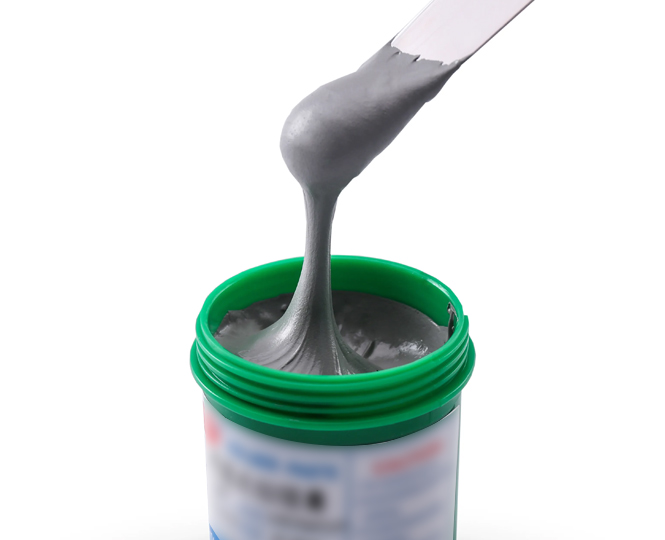
What Is SMT Solder Paste?
SMT (Surface Mount Technology) is an assembly method widely used in PCB manufacturing, and SMT solder paste is one of the essential materials in the SMT process. Put simply, SMT solder paste is a specialized material used to create reliable solder joints between surface mount components and printed circuit boards.
Composition of SMT Solder Paste
SMT solder paste mainly consists of solder alloy powder, flux, and various additives such as rheology modifiers.
Solder alloy powder is the main component of SMT solder paste. It consists of small, spherical particles with high purity and a controlled particle size distribution. The alloy composition and particle size directly influence printability, reflow performance, and solder joint reliability.
Flux is a chemical agent that helps remove oxide layers from metal surfaces and improves solder wettability during the reflow process. By cleaning PCB pad and component terminal surfaces, reducing oxidation effects, and promoting solder flow, flux plays a critical role in achieving strong and reliable solder joints.
Rheology modifiers are additives that control the flow characteristics of solder paste, providing the proper balance of tackiness, print definition, and slump resistance during stencil printing and component placement.
How SMT Solder Paste Works
The primary function of SMT solder paste is to form solder joints that provide both electrical and mechanical connections between electronic components and the PCB. Using high-quality SMT solder paste improves soldering quality, reduces defects such as bridging and void formation, and enhances the long-term reliability of electronic products.
In a typical SMT process, solder paste is first printed onto PCB pads through a stencil. Electronic components are then placed onto the printed solder paste by pick-and-place machines. Finally, the entire assembly passes through a reflow oven, where the solder paste melts, wets the joining surfaces, and solidifies into reliable solder joints.
Applications and Selection
SMT solder paste has a wide range of applications, covering nearly all electronic products, including mobile phones, tablets, televisions, automotive electronics, medical equipment, industrial control systems, and IoT devices.
Different electronic products impose different requirements on SMT solder paste. For high-density assemblies such as mobile phones, wearables, and handheld devices, solder paste with a finer particle size (typically Type 4 or Type 5) is essential to ensure precise printing accuracy and reliable fine-pitch soldering. For larger products such as televisions and automotive electronics, standard Type 3 solder paste generally provides a good balance of printability, production efficiency, and cost-effectiveness.
Conclusion
SMT solder paste is an essential material in the SMT assembly process. It plays a critical role in forming reliable solder joints between electronic components and PCBs, improving soldering quality and product reliability. Since different electronic products have different assembly requirements, selecting the appropriate solder paste formulation is essential for achieving optimal SMT assembly performance.