

What Causes Cold Solder Joints in SMT Assembly?
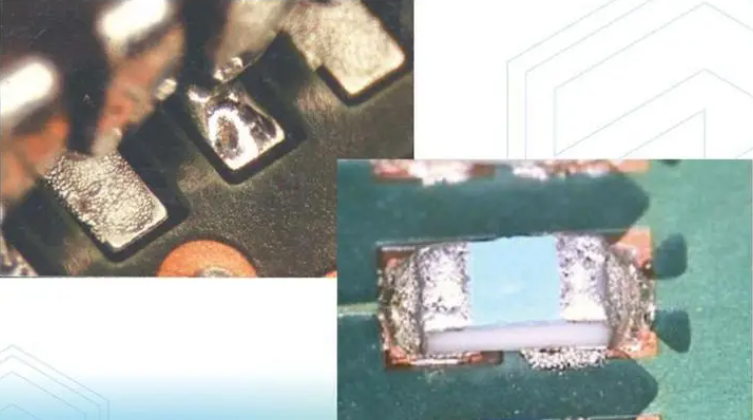
Cold solder joints can lead to intermittent electrical connections, increased contact resistance, and reduced mechanical strength. Under vibration, thermal cycling, or other operating stresses, a poorly formed solder joint may eventually crack or fail, resulting in circuit malfunction. Therefore, understanding the causes of cold solder joints is important for maintaining reliable SMT assembly quality.
What Does a Cold Solder Joint Look Like?
A cold solder joint may have a dull, rough, grainy, or uneven appearance. However, visual appearance alone is not always sufficient to determine whether a solder joint is cold. The more important characteristic is that the solder has not properly wetted and bonded to the component terminal and PCB pad.
In a properly formed solder joint, molten solder should spread across the joining surfaces and form good metallurgical and mechanical connections. If the solder remains poorly wetted or does not fully bond with the metal surfaces, the resulting joint may have insufficient strength and electrical reliability.
Several factors can contribute to cold solder joints in SMT assembly.
1. Insufficient Reflow Temperature
An incorrect reflow temperature profile is one of the primary causes of cold solder joints in SMT assembly.
During reflow soldering, the PCB must reach an appropriate temperature so that the solder alloy in the solder paste can fully melt and properly wet the PCB pads and component terminals. If the peak temperature is too low or the time above the solder's liquidus temperature is insufficient, the solder may not fully melt or wet the joining surfaces.
This can result in weak solder joints or incomplete metallurgical bonding.
To prevent this problem, the reflow temperature profile should be established according to the solder paste manufacturer's specifications, PCB materials, component requirements, and product design. Important parameters include the preheat stage, soak stage, peak temperature, time above liquidus, and cooling rate.
2. Insufficient Heating Time
In addition to peak temperature, heating time also affects solder joint formation.
If the PCB passes through the reflow oven too quickly, the solder paste may not receive sufficient thermal energy to complete the melting and wetting process. This can occur when the conveyor speed is too high or the reflow profile is not properly configured.
Therefore, both temperature and heating time need to be controlled together. Simply increasing the peak temperature is not an appropriate solution if the overall thermal profile is incorrect.
3. Oxidation or Contamination of PCB Pads and Component Terminals
Oxidation and surface contamination can significantly reduce solderability.
If PCB pads, component terminals, or leads are oxidized, the molten solder may have difficulty wetting the metal surfaces. Contamination from dust, oil, moisture, or improper handling can have a similar effect.
In these situations, the solder may appear to be present on the pad, but the actual bonding between the solder and the metal surface may be inadequate, resulting in a weak solder joint.
Proper storage, handling, and material management are therefore important. PCB and component surfaces should be kept clean and protected from excessive oxidation before SMT assembly.
4. Poor Solder Paste Condition
The condition of the solder paste also has a direct influence on solder joint quality.
Solder paste contains solder alloy powder and flux. If the solder paste is expired, improperly stored, exposed to unsuitable temperatures, or used beyond its recommended working time, its printing and reflow performance may deteriorate.
Reduced flux activity can affect oxide removal and solder wetting, increasing the risk of poor solder joints.
For this reason, solder paste should be stored, thawed, mixed, and used according to the manufacturer's recommended conditions.
5. Improper Solder Paste Printing
The amount and distribution of solder paste deposited on each PCB pad can also affect solder joint formation.
If insufficient solder paste is printed onto a pad, there may not be enough solder to form an adequate joint. In addition, poor printing alignment or inconsistent paste deposits can result in uneven solder coverage and poor contact between the solder and component terminals.
Proper stencil design, stencil maintenance, printing pressure, printing speed, and alignment are important for achieving consistent solder paste deposits.
6. Poor Solderability of PCB or Components
The surface finish of the PCB and the condition of component terminals can affect solderability.
If the PCB surface finish is unsuitable, degraded, or improperly processed, or if component terminals have excessive oxidation, the solder may not wet the surfaces properly during reflow.
Selecting appropriate PCB surface finishes and qualified components can help maintain consistent solderability and reduce the risk of cold solder joints.
How to Prevent Cold Solder Joints in SMT Assembly
To reduce the risk of cold solder joints, PCB assembly manufacturers should focus on several key areas. First, the reflow temperature profile should be properly developed and regularly verified. Second, solder paste should be stored and handled according to the manufacturer's specifications. Third, PCB pads and component terminals should be protected from oxidation and contamination.
In addition, solder paste printing parameters should be properly controlled to ensure consistent paste volume and alignment. SMT equipment, including solder paste printers and reflow ovens, should also be regularly maintained and calibrated to ensure stable production conditions.
After reflow soldering, inspection methods such as AOI can help identify visible soldering and component placement defects. X-ray inspection can also be used when necessary to examine hidden solder joints, such as those beneath BGA and other area-array packages.
Conclusion
Cold solder joints in SMT assembly are mainly associated with insufficient solder melting or poor wetting between the solder, PCB pad, and component terminal. Common contributing factors include an improper reflow temperature profile, insufficient heating time, oxidation or contamination, poor solder paste condition, improper solder paste printing, and poor solderability of PCB or component surfaces.
By controlling the reflow process, maintaining proper solder paste conditions, protecting materials from oxidation and contamination, and maintaining stable SMT production parameters, manufacturers can effectively reduce the occurrence of cold solder joints and improve the reliability of PCB assemblies.