

What is DIP Assembly?
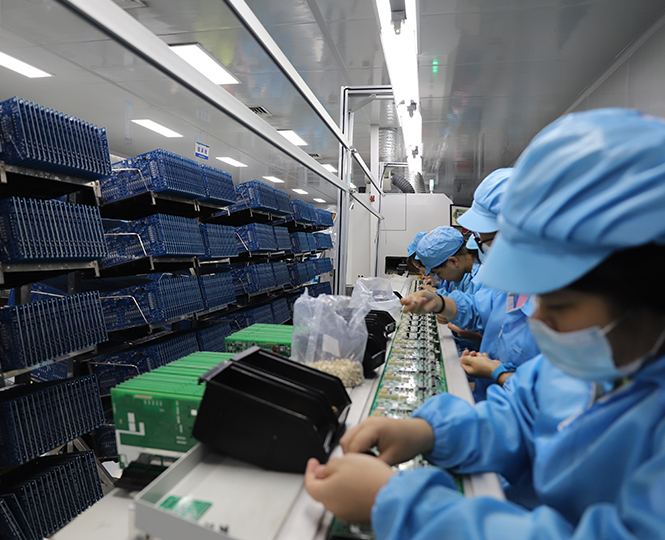
In PCB assembly, DIP and SMT are two widely used electronic assembly technologies. For people who are new to the electronics manufacturing industry, these two processes may be difficult to distinguish. In fact, both DIP and SMT are important assembly methods used to mount electronic components onto printed circuit boards (PCBs).
SMT (Surface Mount Technology) is a surface mounting process in which components are placed directly onto the PCB surface without requiring component leads to pass through drilled holes. Due to its advantages of high assembly density, excellent production efficiency, and compatibility with automated manufacturing, SMT has become the primary technology used in modern PCB assembly.
However, SMT is not suitable for every type of component. For large, heavy, high-power, or mechanically demanding components, DIP assembly is often required to provide stronger mechanical support and reliable electrical connections.
DIP (Dual In-line Package) is an important through-hole assembly process in PCBA manufacturing. Unlike SMT, DIP components are inserted through drilled holes on the PCB and then soldered to form secure connections. The DIP process can be performed through manual insertion or automatic insertion machines, depending on production volume and product requirements.
The typical DIP assembly process includes component preparation, lead forming, component insertion, soldering, trimming, inspection, and testing. After electronic components are inserted into the PCB manually or by an automated insertion machine, the assembled board usually passes through a wave soldering process. The molten solder flows through the bottom side of the PCB, creating reliable solder joints between component leads and PCB pads.
After soldering, excess component leads are trimmed, and the PCBA undergoes visual inspection and quality checks. If soldering defects are identified, manual touch-up soldering is performed to correct the issues. Once the repair process is completed, the PCBA is cleaned and then tested to verify electrical performance. After passing functional testing, the finished boards can be packaged and shipped to customers.
DIP remains an important technology in PCBA manufacturing, especially for applications involving large connectors, power components, transformers, switches, and components that require high mechanical strength. In addition, since SMT and DIP use different assembly methods, their inspection standards and testing processes are also different.
Although SMT is currently the dominant technology in PCB assembly due to its high efficiency and miniaturization advantages, DIP continues to play an irreplaceable role in many electronic products where through-hole components are required.