

ENIG vs. OSP: PCB Surface Finish Comparison
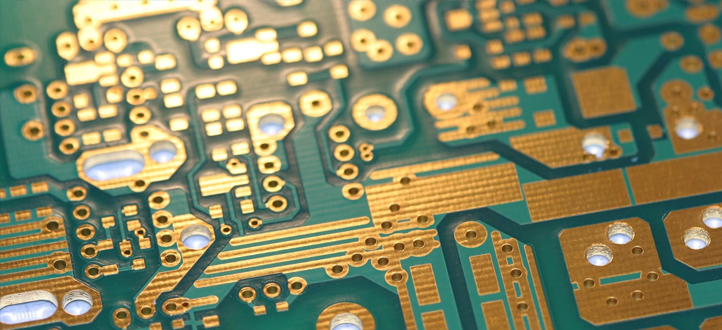
ENIG vs. OSP: Which PCB Surface Finish Should You Choose?
ENIG and OSP protect exposed copper pads before PCB assembly, but they use different materials and form different soldering interfaces. ENIG adds nickel and gold layers, while OSP applies a thin organic coating directly to copper.
Both finishes can support fine-pitch SMT assembly and lead-free soldering. The choice depends on cost, storage conditions, assembly sequence, electrical performance, and connection requirements—not simply whether a product is considered “high-end.�
What Is ENIG?
ENIG stands for electroless nickel immersion gold. In PCB manufacturing, it is commonly called immersion gold.
The process deposits a nickel layer on prepared copper, followed by a thin gold layer. Nickel acts as a diffusion barrier, while gold protects the nickel surface from oxidation before soldering.
During soldering, the thin gold layer dissolves into the molten solder, allowing the solder to react with the underlying nickel.
ENIG should not be divided into “soft immersion gold� and “hard immersion gold.� Electroplated soft gold and hard gold are separate finishes with different deposition methods and applications.
What Is OSP?
OSP stands for organic solderability preservative. It forms a thin organic protective coating on exposed copper without adding metallic nickel or gold layers.
The coating limits copper oxidation and preserves solderability before assembly. OSP chemistry manufacturer Shikoku Chemicals describes copper protection and solderability preservation as the coating’s core functions. Shikoku Chemicals: What’s OSP
During soldering, flux chemistry and heat remove or disrupt the coating at the joint, allowing solder to wet the copper. Describing the coating simply as “evaporating when heated� does not adequately explain its behavior.
Unlike ENIG, OSP allows a solder-to-copper interface rather than a solder-to-nickel interface.
ENIG vs. OSP at a Glance
| Selection factor | ENIG | OSP |
|---|---|---|
| Protective structure | Nickel with a thin gold coating | Organic coating directly on copper |
| Relative finishing cost | Generally higher | Generally lower |
| Surface flatness | Suitable for fine-pitch assembly | Thin coating preserves underlying copper flatness |
| Soldering interface | Primarily solder-to-nickel after gold dissolution | Solder-to-copper |
| Storage requirements | Follow the supplier’s specified shelf life and packaging conditions | Follow finish-specific storage, handling, and exposure limits |
| Multiple reflow cycles | Validate against the planned assembly sequence | Use a formulation qualified for the required thermal sequence |
| Main finish-related concerns | Nickel corrosion and plating defects | Coating damage, copper oxidation, and reduced solderability |
| Repeated sliding contacts | Not a substitute for hard gold | Not intended as a durable contact finish |
Key Differences in Manufacturing and Assembly
Cost and Production Planning
OSP generally costs less because it does not require nickel and gold deposition. This can make it attractive for cost-sensitive production, including complex assemblies.
ENIG usually carries a higher finishing cost. Whether that cost is justified depends on the assembly process, storage plan, and connection requirements.
Compare total manufacturing cost, including handling, inspection, rework, and inventory requirements. A lower finish price does not automatically produce the lowest overall cost.
Solderability and Reflow Performance
Both finishes can provide good solderability when properly manufactured, stored, and processed.
OSP should not automatically be treated as a single-reflow finish. For example, MacDermid Alpha specifies its ENTEK PLUS HT PCB finish for multiple lead-free reflows. This is a capability of that particular formulation, not a universal guarantee for every OSP coating. MacDermid Alpha: ENTEK PLUS HT
For OSP boards, evaluate the complete thermal sequence, including double-sided reflow, subsequent through-hole soldering, and possible rework. Pads left unsoldered through earlier heating cycles deserve particular attention.
Do not infer a mandatory nitrogen requirement from the finish name alone. Select and qualify the soldering atmosphere with the OSP and solder paste suppliers, taking the thermal profile and acceptance criteria into account.
Storage Life and Handling
Statements such as “ENIG lasts more than 12 months� or “OSP lasts less than 6 months� should not be used as universal specifications.
Follow the PCB supplier’s shelf-life commitment and packaging instructions for the actual finish. Unopened storage life is different from the allowable exposure after opening, heating, or partial assembly.
Protect OSP-coated pads from fingerprints, abrasion, and incompatible cleaning processes. ENIG also requires suitable handling and protection from contamination.
Flatness and Fine-Pitch Components
Both ENIG and OSP can be suitable for BGAs, QFNs, and other fine-pitch packages.
OSP adds very little surface topography, while ENIG provides a relatively uniform metallic finish. Neither corrects board warpage, poor copper geometry, or unsuitable stencil design.
Assembly results depend on the complete pad, solder paste, placement, and reflow process—not the finish alone.
Reliability: Correcting Two Common Misconceptions
ENIG Requires Nickel Corrosion Control
ENIG is not immune to nickel corrosion or the related defect commonly called black pad.
IPC’s publicly available IPC-4552B contents identify nickel corrosion and ENIG corrosion performance monitoring as subjects covered by the specification. This confirms that corrosion control is a recognized part of ENIG quality assessment; it does not establish the acceptability of a particular board. IPC-4552B: Official public contents
For purchasing and inspection, use the applicable complete specification and customer requirements. Do not infer numerical acceptance limits from a public contents page.
OSP does not contain a nickel layer, so it does not share this specific nickel-corrosion mechanism. Its risks instead include deterioration of the protective coating and oxidation of the underlying copper.
OSP Does Not Inherently Cause Tin Whiskers
OSP is an organic coating, not a tin deposit. It is therefore inaccurate to describe the OSP coating itself as prone to tin whisker growth.
NASA identifies pure tin finishes as susceptible to spontaneous growth of conductive tin whiskers. This supports the distinction between tin-related material risks and an organic copper-protection coating. NASA: Pure tin finish and whisker risk
Tin-containing finishes may exist elsewhere in an assembly regardless of the PCB finish. Choosing OSP therefore does not establish that the complete product is free from tin whisker risk.
Neither ENIG nor OSP is automatically more reliable in every application. Reliability depends on materials, joint structure, manufacturing controls, and service conditions.
Special Requirements That Can Change the Choice
RF and Microwave Performance
ENIG can affect conductor loss in high-frequency circuits. Research by Brian Rautio of Sonnet Software and John Coonrod of Rogers Corporation examined ENIG-related insertion loss through measurement and modeling from 1 to 50 GHz. Rautio and Coonrod: ENIG finish modeling and measurements
OSP adds no nickel layer, avoiding that particular source of finish-related loss. However, the best finish still depends on transmission-line geometry, frequency, copper characteristics, and manufacturing requirements.
The cited research should not be interpreted as proving that OSP is always the best finish for every RF design.
Wire Bonding, Test Points, and Press-Fit Connections
Wire bonding requires a finish qualified for the wire material and bonding method. Do not assume that a solderable ENIG surface is suitable for every chip-on-board or wire-bonding process.
For electrical testing, validate the test-pad finish and probe system together. Organic coatings can affect how probes establish electrical contact.
For press-fit connections, follow the connector manufacturer’s approved hole finish, plating, and dimensional requirements. Avoid approving or rejecting a finish solely through a generic ENIG-versus-OSP comparison.
How to Choose Between ENIG and OSP
Consider ENIG when a metallic protective finish meets the assembly and connection requirements and its additional cost is justified. Consider OSP when lower finishing cost, direct solder-to-copper connections, and a controlled production flow fit the product’s needs.
Both can be used in lead-free assemblies. Confirm environmental compliance through supplier documentation rather than inferring it from the finish name.
Before ordering, review the complete assembly sequence, storage plan, test strategy, and connection requirements with the PCB manufacturer and assembler. Select the finish that meets those conditions through a qualified process.