

SMT Reflow Soldering Process: A Key Soldering Technology in PCBA Manufacturing
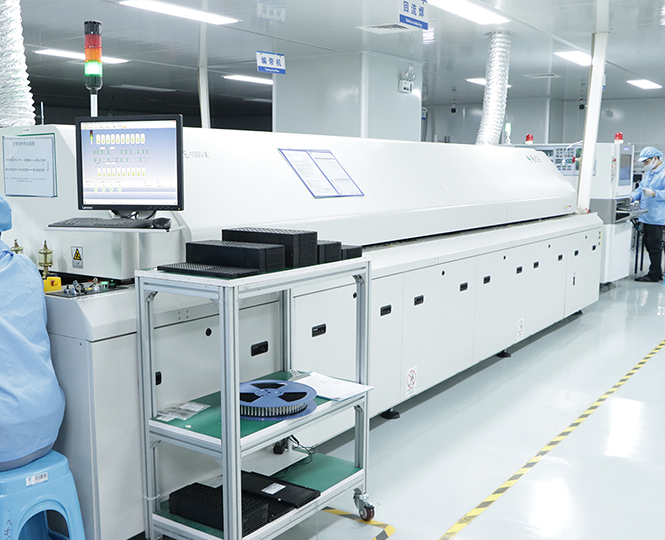
In the modern electronics manufacturing industry, PCBA (Printed Circuit Board Assembly) plays a vital role in the production of electronic products. As a key step in the SMT (Surface Mount Technology) assembly process, reflow soldering is essential for achieving reliable connections between electronic components and printed circuit boards.
With the continuous development of electronic products toward miniaturization, higher performance, and greater integration, traditional THT (Through Hole Technology) assembly methods can no longer fully meet the requirements of modern electronic devices in terms of space utilization and production efficiency. SMT technology has gradually become the mainstream manufacturing method in PCB Assembly due to its advantages of high-density placement, smaller components, and automated production. Reflow soldering is a key process that ensures reliable bonding between surface mount devices (SMDs) and PCBs.
What is SMT Reflow Soldering?
SMT Reflow Soldering is a process that uses heat energy to solder surface mount devices (SMDs, Surface Mount Devices) onto a PCB.
During the SMT assembly process, solder paste is first precisely applied onto the PCB pads through stencil printing. Then, an automatic pick-and-place machine accurately places electronic components onto their designated positions according to PCB design data. After component placement, the PCB enters the reflow oven, where the temperature profile is carefully controlled to melt the solder alloy particles in the solder paste. The molten solder then wets and bonds with the PCB pads and component terminals, forming strong and reliable solder joints after cooling.
In simple terms:
SMT reflow soldering is a process that controls the reflow oven temperature profile to allow solder paste to go through preheating, activation, melting, and cooling stages, creating reliable mechanical and electrical connections between electronic components and PCB pads.
SMT Reflow Soldering Process
The SMT reflow soldering process mainly consists of three key steps: solder paste printing, component placement, and reflow soldering. Each stage plays an important role in determining the final quality and reliability of the PCBA product.
1. Solder Paste Printing
Solder paste printing is the first step in the SMT Assembly process. A precision stencil is used to apply the appropriate amount of solder paste onto designated PCB pad areas. Solder paste is typically composed of solder alloy powder and flux. During the reflow process, it forms solder joints that provide both mechanical bonding and electrical connection between component terminals and PCB pads.
The thickness, position accuracy, and uniformity of solder paste printing directly affect the soldering quality. Therefore, proper stencil parameters must be selected according to PCB design requirements, component package types, and soldering process specifications to ensure accurate and consistent solder paste application.
2. Component Placement
After solder paste printing, the PCB enters the automatic pick-and-place stage.
The pick-and-place machine accurately positions surface mount components, including resistors, capacitors, IC chips, and connectors, onto the corresponding PCB pads according to PCB design files.
Compared with traditional THT components, SMT components are smaller and lighter. They can be mounted directly onto the PCB surface and support single-sided or double-sided assembly, enabling higher component density, improved circuit integration, and meeting the requirements of modern electronic products for compact and lightweight designs.
3. Reflow Soldering
After component placement, the PCB is transferred into the reflow oven for soldering.
The reflow oven uses a heating system and controlled airflow circulation to process the PCB according to a predefined temperature profile, allowing the solder paste to complete melting, wetting, and solidification.
The SMT reflow soldering process typically consists of four stages:
(1) Preheating Zone
During the preheating stage, the PCB temperature gradually increases, allowing the PCB, electronic components, and solder paste to warm up evenly. This reduces thermal shock and prevents component damage or PCB stress caused by excessive temperature changes.
(2) Soaking Zone
In the soaking stage, the flux becomes activated, reducing oxidation effects on metal surfaces and improving the wettability between the solder and PCB pads or component terminals. At the same time, the overall PCB temperature is stabilized to prepare for the soldering stage.
(3) Reflow Zone
When the temperature rises above the melting point of the solder paste, solder alloy particles melt into liquid solder. The solder then fully wets the PCB pads and component terminals, forming reliable solder joints.
(4) Cooling Zone
During the cooling stage, the liquid solder gradually solidifies under controlled cooling conditions, forming solder joints with good mechanical strength and electrical performance while reducing internal stress and improving long-term product reliability.
Advantages of SMT Reflow Soldering
1. High-Density Assembly Capability
SMT components are small and lightweight, allowing them to be mounted directly on PCB surfaces and supporting high-density layouts and double-sided assembly. This enables PCBs to accommodate more electronic components and significantly improves circuit integration.
This manufacturing method is widely used in consumer electronics, industrial control systems, automotive electronics, medical devices, and smart hardware products.
2. Improved Production Efficiency
SMT reflow soldering combined with automated pick-and-place equipment enables high-speed and continuous production. It significantly improves PCBA manufacturing efficiency while reducing production errors caused by manual operations and enhancing product consistency.
3. Enhanced Soldering Reliability
By precisely controlling the reflow temperature profile, solder materials, and process parameters, SMT reflow soldering creates stable connections between solder joints, PCB pads, and component terminals, improving the reliability and durability of electronic products.
4. Supports Miniaturization of Electronic Products
As electronic products continue to develop toward thinner, lighter, and higher-performance designs, SMT reflow soldering supports smaller components, more complex PCB layouts, and higher component density, providing essential manufacturing capabilities for modern electronics.
5. Reduced Production Cost for Mass Manufacturing
Although SMT equipment requires significant initial investment, its high automation level makes it highly suitable for large-scale PCBA Assembly production. It helps reduce labor costs and improves overall manufacturing efficiency.
Importance of SMT Reflow Soldering in PCBA Manufacturing
In the PCBA Manufacturing process, reflow soldering not only determines the connection quality between electronic components and PCBs but also directly affects the stability, reliability, and service life of final electronic products.
As the electronics industry continues to advance toward smarter and higher-performance solutions, SMT reflow soldering technology is also continuously evolving with more precise temperature control, advanced solder materials, higher levels of automation, and intelligent manufacturing systems.
For professional PCB Assembly Manufacturers, mastering reliable SMT reflow soldering technology is essential for improving PCB assembly quality, ensuring product reliability, meeting customized customer requirements, and building long-term competitiveness in the global electronics manufacturing market.