

How to Remove Oxidation from PCB Pads?
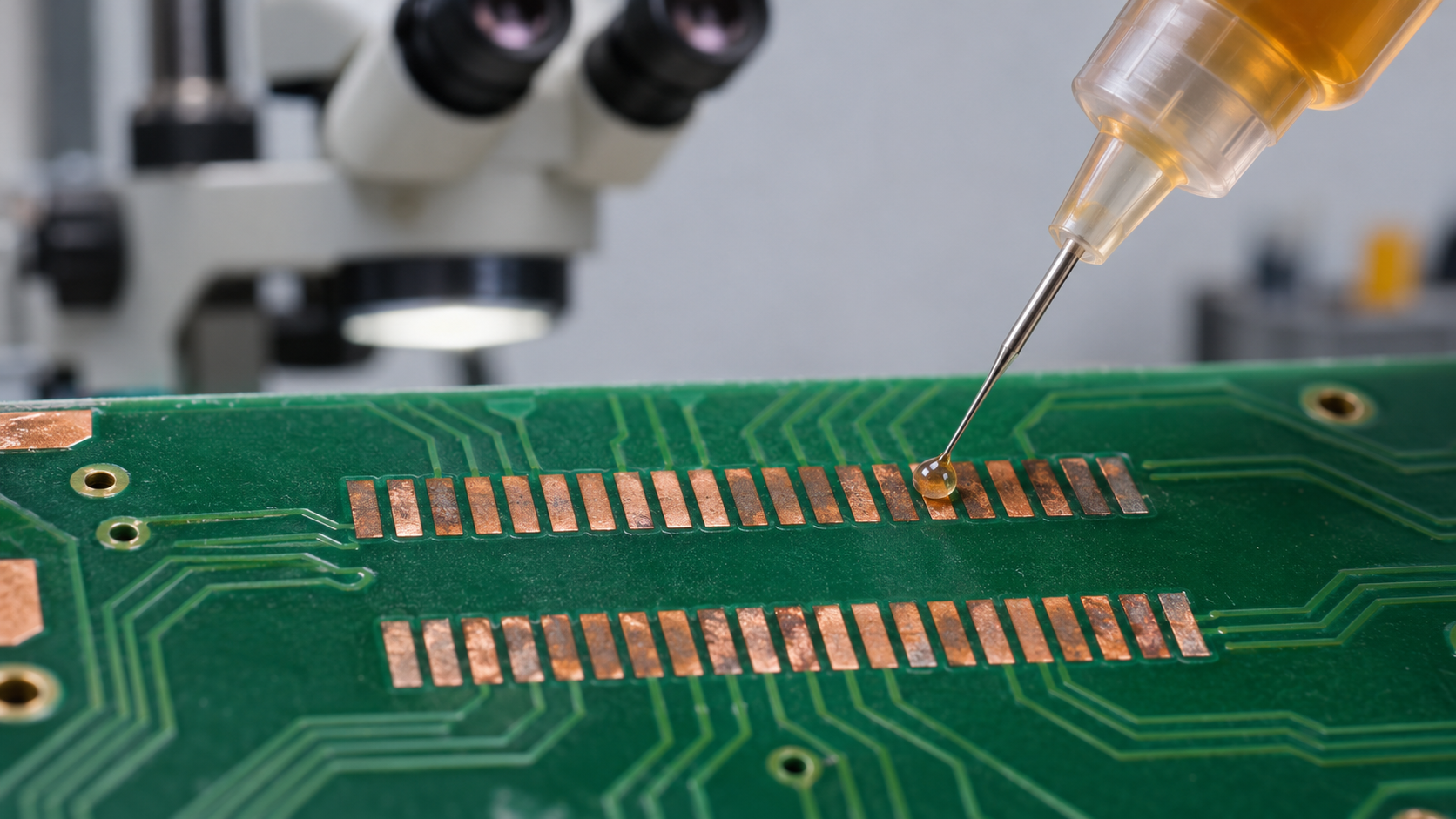
How to Remove Oxidation from PCB Pads
Oxidation on PCB pads can prevent solder from wetting the surface properly, leading to incomplete joints and assembly defects. The appropriate treatment depends on the surface finish, the extent of oxidation, and whether the board is bare or already populated.
For light oxidation, a compatible electronics-grade flux used within a controlled soldering process may restore wetting. Heavily corroded pads or degraded surface finishes require further evaluation and may need professional reconditioning or board replacement. Heating or scrubbing every affected pad is not a reliable solution.
Identify the Surface Condition Before Cleaning
PCB solder pads are usually copper protected by a surface finish such as hot air solder leveling (HASL), electroless nickel immersion gold (ENIG), or organic solderability preservative (OSP). These finishes protect the underlying copper and help maintain solderability.
A discolored pad is not necessarily exposed copper oxide. Its appearance may result from flux residue, contamination, tarnishing, or deterioration of the finish.
Before selecting a treatment, check:
The specified surface finish and the supplier’s handling requirements.
Storage history, packaging condition, and previous thermal exposure.
Whether the problem affects isolated pads or an entire production lot.
Evidence of corrosion, pitting, lifted pads, or damaged solder mask.
For production boards, evaluate solderability on representative samples using an appropriate test method. Appearance alone does not establish whether a pad will form an acceptable solder joint.
Methods for Restoring PCB Pad Solderability
1. Remove Surface Contamination with a Compatible Cleaner
Oil, handling residues, and some flux deposits can interfere with soldering or obscure the pad surface. Remove these contaminants with an electronics cleaning agent compatible with the finish, solder mask, and any installed components.
Isopropyl alcohol can remove some organic contamination, but it is not a general-purpose copper oxide remover. Likewise, a flux remover is designed to clean flux residues; it should not be assumed to remove metal oxides.
Use the cleaner’s specified application and drying process. On populated boards, consider whether liquid or dissolved contamination could become trapped beneath components.
2. Use an Appropriate Electronics-Grade Flux
Flux removes surface oxides during soldering and helps molten solder wet the joint surfaces. It also supports effective solder flow during component removal and replacement.
For mildly oxidized pads, select a flux compatible with the surface finish, solder alloy, and soldering process. Apply it according to the manufacturer’s instructions and use a controlled thermal profile.
Increasing flux activity is not automatically the best solution. More active chemistry may require a different cleaning process, and residue trapped beneath components can create reliability concerns.
Water-soluble flux residues must be removed as specified. Incomplete removal can cause immediate or delayed corrosion.
“No-clean� also does not mean that residues are acceptable in every application. Cleaning requirements depend on the product, process conditions, and subsequent operations.
3. Consider Controlled Pad Conditioning and Retinning
During localized repair, a qualified technician may condition an affected pad and apply fresh solder after restoring wetting. Retinning can prepare the connection for component replacement, but it does not repair missing copper, a lifted pad, or a defective underlying finish.
Control solder volume, contact time, and mechanical force. Excessive heating or pressure during solder removal can damage the PCB. Component-specific rework guidance should take precedence over a generic procedure.
Retinning is not a universal treatment for fine-pitch SMT footprints because uneven solder deposits can interfere with later paste printing and component placement.
4. Refer Severe Oxidation to the PCB Fabricator
If approved flux and process settings do not restore acceptable wetting, stop repeated soldering attempts and investigate the finish.
For bare boards, the fabricator may evaluate a controlled chemical treatment or surface finish reprocessing. Suitability depends on the finish, board construction, and remaining material condition.
Chemical reconditioning must control material removal, rinsing, drying, and final solderability. Some boards cannot be economically or reliably recovered and should be replaced.
Methods That Should Not Be Used as General Fixes
Household Acids
Vinegar and citric acid can react with certain copper oxides, but that does not make household solutions suitable for PCB manufacturing.
Their use lacks the process controls needed to verify material compatibility, residue removal, and long-term reliability. Do not substitute household acids or plumbing flux for a qualified electronics process.
Uncontrolled Abrasion
Sandpaper, erasers, abrasive pads, and aggressive brushing can remove protective finishes, thin copper, damage solder mask, or leave debris.
Microabrasion is also a material-removal process. It cannot be assumed to remove only oxide without affecting the underlying surface. Any mechanical treatment should be limited to a defined repair procedure with suitable inspection afterward.
Heating Alone
Ordinary hot-air rework and reflow heating do not reliably strip oxide from PCB pads. Heating in air can increase oxidation, while excessive thermal exposure can damage the board or components.
In conventional soldering, heat enables the flux chemistry and soldering reactions to work; it does not replace the flux. Repeated reflow cycles should not be used as an oxidation-removal strategy.
Verify the Result Before Resuming Assembly
After treatment, inspect the pads for damage and confirm that solder wets the intended surfaces under the approved process conditions.
For a recurring or lot-wide issue, document the affected finish, storage history, treatment, and test results. A successful hand-soldering attempt on one pad does not demonstrate that an entire batch is suitable for production.
Complete any required residue cleaning and assembly testing before releasing the boards.
How to Prevent PCB Pad Oxidation
Follow the PCB supplier’s finish-specific shelf-life, packaging, and storage instructions. Keep boards in their specified protective packaging until needed, avoid touching solderable surfaces, and reseal unused boards appropriately.
Control exposure to humidity, contamination, and unnecessary heating. OSP-finished boards, in particular, require attention to storage and handling because the condition of the protective coating affects solderability.
Baking may be specified for moisture management, but it is not an oxide-removal method. Use a supplier-approved baking procedure when required, taking the surface finish into account.
Maintaining solderability through proper handling is generally more dependable than trying to recover deteriorated pads immediately before assembly.